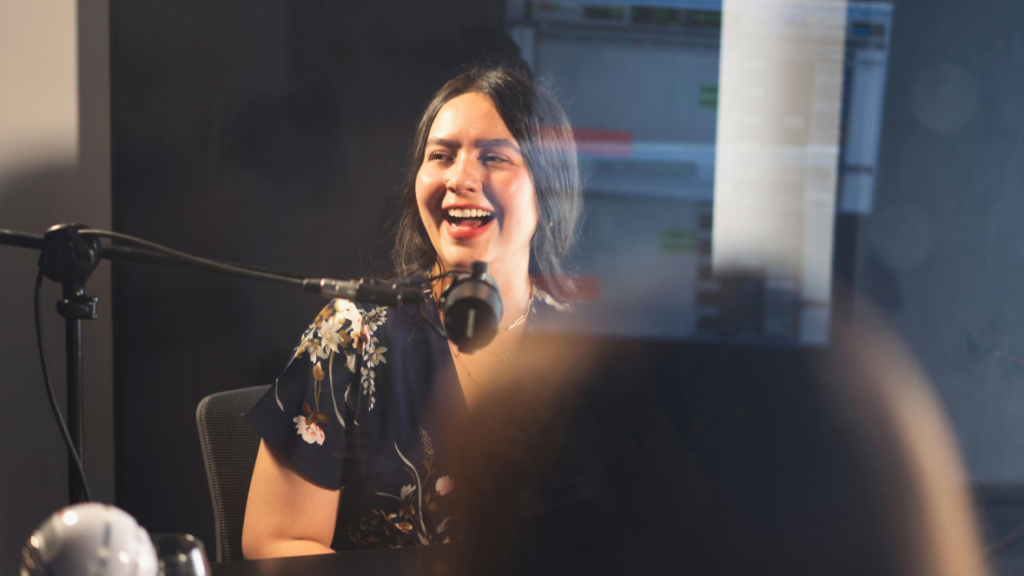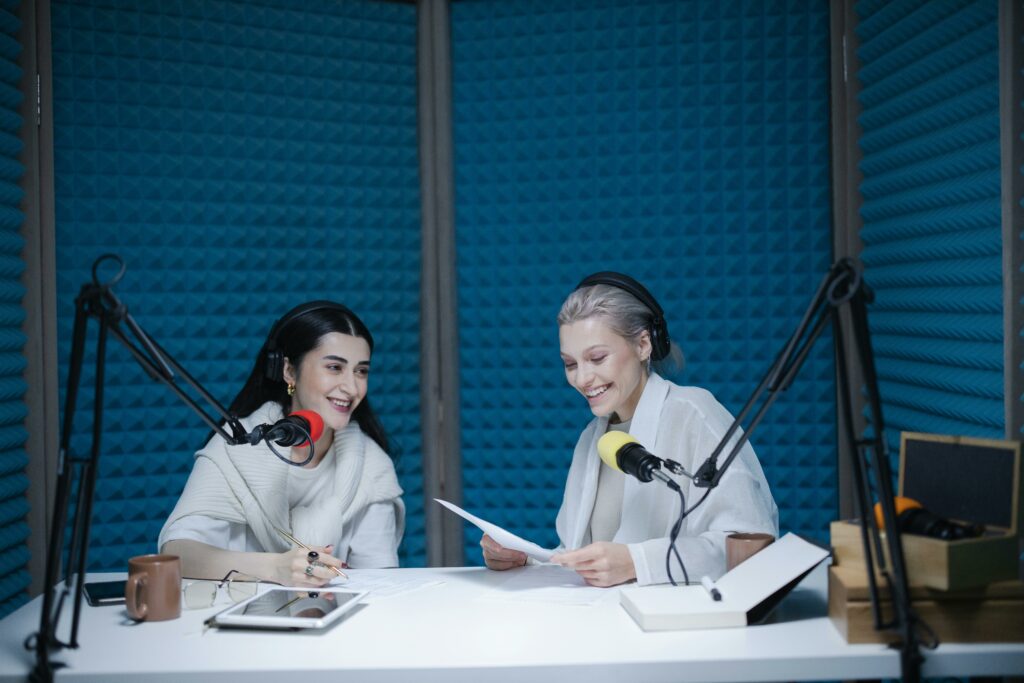
You should launch a podcast in 2026 because it is one of the fastest-growing, lowest-barrier media formats available, reaching a self-selected, highly engaged audience for under €150 in startup equipment. An estimated 504 million people listened to podcasts in 2024, and that figure is projected to exceed 650 million by 2027 (Statista, 2024). Whether you are an independent creator building a community around a niche passion or a brand seeking to deepen customer trust, the barriers to entry are lower than almost any other content format: a decent USB microphone and a hosting account are all you need to publish your first episode.
Whether you are an independent creator building a community around a niche passion, or a brand seeking to deepen customer trust, the barriers to entry are lower than almost any other content format: a decent USB microphone and a hosting account are all you need to publish your first episode.
Unlike blogs or video, a podcast reaches a deeply engaged, self-selected audience while they commute, exercise, or cook, no screen required. That intimacy is the format’s superpower: a listener spends 30 minutes with your voice in their ears, something no social post can match. All you need to get started is a decent USB microphone and a hosting account.
This guide isn’t just about how to start a podcast; it’s your launchpad to podcast success.
Whether you’re looking to engage listeners, monetize your passion, or simply carve out a niche in the digital soundscape, here’s why and how you should take the mic. Ready to transform your thoughts into podcasts?
Let’s make your voice heard. 🚀
What is a podcast and where did it come from?
The podcast is a digital audio format that predates the video-for-all era. If you’re under 25, you may never have known the pre-podcast internet but the format has been around since the early 2000s, long before streaming video was practical on most connections.
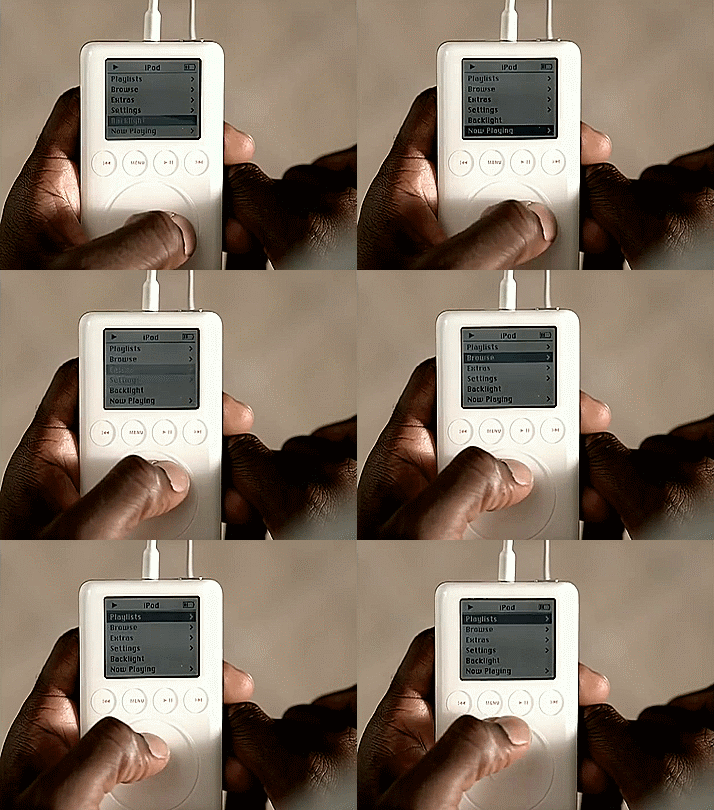
The genesis of the podcast dates back closely to the launch of the iPod. At the time, we did not have the storage space needed to save videos or to view them online, given the capacity of our (very) limited data plans. This audio format was thus in vogue and in adequacy with the means which we had at the time to inform and entertain ourselves. The podcast could be downloaded and listened to without Internet connection by downloading it from iTunes on your iPod or from Windows Media for your MP3 player.
How popular is podcasting in 2026? Key listener and revenue data
The podcast is back in force and now competes directly with mainstream media for attention — on listeners’ terms. According to Edison Research’s Infinite Dial 2024, 42% of Americans aged 12+ listened to a podcast in the past month, up from just 9% in 2008. Globally, podcast ad revenue is expected to exceed $4 billion by 2025 (IAB Podcast Advertising Revenue Report). Podcasting is the only on-demand audio format that lets you dig into a topic in depth with no paywall, no broadcast licence, and no algorithm forcing everything into 30-second clips and you can start without a studio camera or expensive editing software.
The podcast also allows us to reconnect with our own imagination, which apart from reading is more and more restricted. It also allows us to reconnect with freedom, because the podcast allows us to do other things while listening to it (such as cleaning or commuting, for example). It is therefore easier to integrate podcasts into our lives and to take your time in a world that continues to move faster and faster.






Examples of French podcasts
Why are you launching a podcast?
If you’re an independent podcaster:
Podcasting is the new “pirate radio”. A format accessible to all at a lower production cost to allow you to express yourself freely. You have a subject you are passionate about (cooking, motorcycles, medieval cosmetics…) and you want to share your passion by expressing your point of view or your expertise to other interested people. Not sure how to pin down the right angle? Our guide on how to choose your podcast topic and format walks through the decision step by step.
It’s also a good excuse to meet people you are interested in and exchange with them (e.g. Antonin Archer from the Nouvelle école podcast who was able to discuss with a number of personalities). Finally, you stand out from the umpteenth blogs by offering a more personal format because we come directly into contact with your voice, and therefore you.
Launching a podcast as an independent creator offers a unique platform to express your voice, reach a targeted audience, and build a community around your interests or expertise.
Here are some reasons why you might consider starting a podcast
The most compelling reason I hear from independent podcasters who’ve gone through the process? It forces clarity. When you have to speak your ideas aloud, coherently, for 20-40 minutes–you quickly discover what you actually know versus what you only think you know. Beyond that personal development angle, the practical upsides stack up quickly:
- Personal expression with zero gatekeeping: No editor, no publisher, no algorithm deciding whether your topic is ‘commercially viable’. You own the feed and the audience relationship.
- Niche reach that blogs can’t match: A podcast about 18th-century French typography can find its 2,000 true fans globally, an audience that would never sustain a local radio show.
- Low startup cost: You can record a broadcast-quality first episode for under €150 in equipment (see our guide to essential podcast equipment).
- Flexible publishing: Record in batches on Sunday, schedule for the whole month. No live broadcast slot to protect.
- Network effects: Inviting a guest legitimises a cold outreach email in a way that ‘I write a blog’ rarely does.
- Revenue pathways: Sponsorships, listener support (Patreon-style), paid communities, and course upsells all become viable once you have a consistent audience, typically from around 1,000 downloads per episode.
The format doesn’t care about your follower count, your budget, or whether a commissioning editor thinks your topic is viable. If 2,000 people care deeply about the same obscure thing you do, a podcast is the only medium that can reliably find them and hold them.
If you are a company / agency / or media outlet :
Podcasting lets you multiply your communication channels by offering content that differs from, or complements, your usual output. For a step-by-step walkthrough, see our complete guide to launching a brand podcast and our roundup of top 10 corporate podcast examples. In a brand context, we recommend integrating the podcast into your global communication plan and relaying each episode across your other channels.
It’s one of the highest engagement media channels because 1. your listeners choose to listen to you at a time when THEY decide to give you their attention and 2. the longer format allows for a more in-depth experience.
For the moment (take advantage of it), this format is not yet saturated by your competition so your messages can gain traction more easily than on media where you are a needle in a haystack.
Podcasting is a powerful acquisition tool, particularly for growing businesses. A study found that Listeners are 1.5 times more likely to remember a brand mentioned on a podcast compared to other forms of advertising. Beyond raw reach, your podcast is a weekly proof of expertise: every episode is a public demonstration of what your team knows that competitors don’t. It’s no coincidence that the majority of today’s most-followed business podcasters are also founders or executives, the mic is the shortest path from ‘unknown brand’ to ‘trusted voice’.
These numbers aren’t just theory. Ausha works with thousands of independent and brand podcasters, and the pattern is consistent: shows that publish consistently and optimize for search compound their audience month after month, while sporadic publishers plateau. Podcasting rewards commitment more than budget.
A podcast can also boost your visibility: Google surfaces podcast episodes directly in search results, and platforms like Spotify and Apple Podcasts run their own internal search algorithms that reward well-optimized shows, the discipline known as Podcast Search Optimization (PSO). In our experience helping thousands of podcasters, shows that treat their title and description as searchable metadata (not just branding) see markedly faster audience growth.
Finally, the production costs remain within reach of any company size. Even if you have to be careful about the quality of your production, they will always tend to remain less important aesthetically than the video format.
Here’s why your organization should consider podcasting:
Starting a podcast for your company or agency not only enhances your digital strategy but also builds deeper connections with your audience, helping to set your brand apart in a crowded market.
Conclusion: Why Launch a Podcast?
Why launching a podcast?
You should launch a podcast because it reaches over 504 million global listeners, requires minimal equipment (under €150 to start), and delivers engagement rates far higher than most digital formats, with high episode completion. It works both for independent creators building a niche audience and for brands seeking thought leadership and owned-audience growth.
How much does it cost to start a podcast?
A broadcast-quality first episode can be produced for under €150 in equipment. Free and low-cost editing software options exist, and many podcast hosting platforms offer free tiers to get started.
Is podcasting good for businesses?
Yes. Brand podcast listeners are more likely to research a brand after hearing it in a podcast context. Podcasting builds thought leadership, creates an owned audience that can’t be algorithm-throttled, and costs significantly less to produce than equivalent video content.
Launching a podcast in 2026 is one of the clearest competitive advantages still available to both independent creators and brands, precisely because most have not yet taken it seriously. Independent creators get a direct line to a self-selected audience, without an algorithm controlling their reach. Brands and agencies get a content format that builds trust over dozens of hours of listening, not seconds of scrolling.
Podcasting offers an unparalleled platform to express, engage, and expand your reach with a global audience. It merges the intimacy of spoken word with the scalability of digital media, making it a potent tool for storytelling, marketing, and community building.
The mechanics matter less than the commitment: podcasters who publish consistently for 12 months, regardless of starting quality, almost always outperform those who wait for the perfect setup, a pattern we explore in our podcast content strategy guide.
Start scrappy. Improve in public. Let your audience tell you what they actually want.
So, why not start today? If you’re ready to move from ‘why’ to ‘how’, our
How do I actually launch my first podcast?
To launch a podcast, follow five core steps: (1) choose a clear topic and format, (2) get basic recording gear (a USB microphone and quiet space, under €150), (3) record and edit your first episodes, (4) publish through a hosting platform that generates your RSS feed and distributes to Spotify, Apple Podcasts and Amazon Music, and (5) optimize your show for search (PSO) so listeners can find it. Consistency over 12 months matters more than perfect production quality.
complete guide to creating your first podcast in 2026 walks you through every step, and once you’re live, our PSO & podcast SEO guide shows you how to get discovered. from choosing your format to publishing your first episode. Your audience is already out there, listening.

Launch your podcast with Ausha
All-in-one platform to easily launch and grow your podcast.
Start for Free